
When you walk outside after a storm and see shingles in your yard or water staining your ceiling, that sinking feeling hits hard. After seven decades of helping South Florida families through these exact moments, I can tell you: what you do in the next 24-48 hours matters more than most homeowners realize. Not because I’m trying to rush you into anything, but because the difference between a manageable repair and a full roof replacement often comes down to how quickly you document damage and prevent further water intrusion.
Storm damage roof repair doesn’t have to be overwhelming. With the right action plan, you’ll protect your property, work effectively with your insurance company, and make decisions that fit your actual needs—not what someone’s trying to sell you.
The First 24 Hours: Document Before You Touch Anything
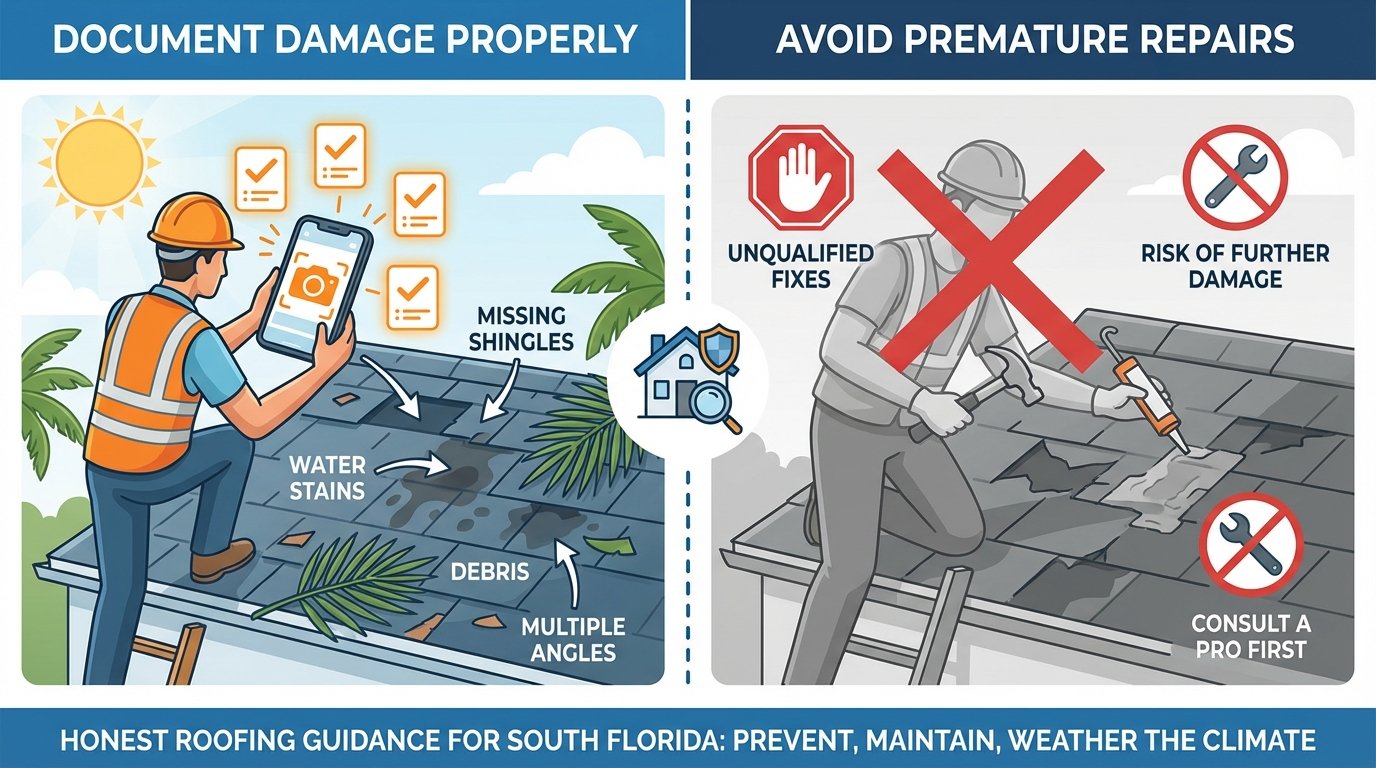
Your immediate instinct might be to start fixing things yourself or calling a roofer to patch everything immediately. Hold that thought. If you’re planning to file an insurance claim, documentation comes first.
Here’s what you need to do right away:
- Take photos and videos from multiple angles: Capture your roof from ground level, showing the entire structure. Get close-ups of specific damage like missing shingles, lifted tiles, or visible cracks. Photograph any interior damage—water stains, dripping, pooling water.
- Note the time and date: Most smartphones automatically timestamp photos, but write down when you first noticed the damage and what the conditions were.
- Check your entire property: Storm damage rarely affects just one spot. Walk around your home looking for damaged soffits, fascia, gutters, and downspouts. These tell a story about wind direction and intensity that matters for your claim.
- Document your neighbor’s damage too: If their roofs show similar damage patterns, it establishes that a weather event caused legitimate widespread damage—this strengthens your claim.
One thing we tell every homeowner: don’t let anyone pressure you into signing anything in these first hours. After Hurricane season in South Florida, storm chasers show up within days, going door-to-door with clipboards and urgent warnings. Legitimate florida roofing contractors will assess your damage without demanding you sign a contract on the spot.
Stop Further Damage: Temporary Protection Measures
While you’re waiting for professional assessment and insurance adjusters, you have a responsibility to prevent additional damage. This is actually part of most insurance policies—the duty to mitigate.
Safe Temporary Fixes You Can Do
If you’re comfortable on a ladder and the weather is calm, you can place tarps over damaged sections. Use 2x4s to weigh down the edges—never nail through a tarp into your roof deck, as this creates more penetrations. For interior protection, place buckets under active leaks and move furniture and valuables away from affected areas.
But here’s where honesty matters: if your roof is steep, if you’re uncomfortable with heights, or if there’s any question about the structural integrity of your roof deck, don’t attempt this yourself. The cost of a professional emergency tarping service is far less than a hospital bill or the liability of having a friend or family member injured on your property.
When to Call for Emergency Service
Contact a qualified florida roofing contractor for emergency service if you’re experiencing active water intrusion, if you can see daylight through your roof, or if you notice sagging areas that suggest structural damage. These situations won’t wait days for an insurance adjuster.
Keep every receipt related to these emergency measures. Your insurance company should reimburse reasonable costs for preventing further damage.
Working With Insurance: What Really Happens
Filing a storm damage claim feels like learning a new language, but it’s more straightforward than the horror stories suggest—if you know what to expect.
Call your insurance company within 24-48 hours of discovering damage. They’ll assign an adjuster who will schedule an inspection, typically within 7-14 days depending on how widespread the storm damage was across your area. Don’t wait weeks to report it; delays can complicate your claim.
The Insurance Inspection
Your adjuster will examine your roof, looking for damage that matches the storm event. They’ll document everything with photos and measurements. Here’s something many homeowners don’t realize: you have the right to be present during this inspection, and you can have your own roofing contractor there too.
Should you have roofers miami or roof repair fort lauderdale contractors present? In my seven decades in this business, I’ve seen it make a real difference. Adjusters are generally fair professionals, but they work for the insurance company. A knowledgeable contractor can point out damage that might be missed—not by inventing problems, but by knowing where to look for the secondary effects of wind and water intrusion.
For instance, when wind lifts shingles, even if they settle back down, the seal is broken. An experienced eye spots the subtle signs: creased shingles, exposed nail heads, or granule loss patterns that indicate wind stress. These details affect whether you’re looking at spot repairs or more comprehensive storm damage roof repair.
Understanding Your Estimate
The adjuster will provide an estimate. This isn’t the final number you’ll receive—it’s their assessment of covered damage at their calculated costs. You’ll typically see two figures: Actual Cash Value (ACV) and Replacement Cost Value (RCV).
ACV is what you get initially—the depreciated value of your roof based on age. RCV is what you get after completing repairs, which covers the full replacement cost. The difference between these two numbers can be thousands of dollars, which is why completing proper repairs and submitting final invoices matters.
Getting Professional Assessments: What to Ask
You need at least two to three estimates from licensed florida roofing contractors. Not to play them against each other on price, but to understand the full scope of your damage and your actual options.
When meeting with contractors, ask these specific questions:
- What’s my realistic timeline? From permit to completion, how long will this take?
- Can this be repaired, or does it need replacement? Don’t accept vague answers. Ask them to show you specifically why they’re recommending what they’re recommending.
- What warranties apply? Understand both manufacturer warranties on materials and workmanship warranties from the contractor.
- How will you handle my insurance claim? Some contractors work directly with insurance, others expect you to manage it. Know what you’re signing up for.
- What’s your supplement process? Often initial insurance estimates miss things. How does the contractor handle requesting additional funds for uncovered damage?
Red Flags to Watch For
After 70 years serving South Florida, we’ve seen every trick in the book. Avoid contractors who offer to pay your deductible—this is insurance fraud. Walk away from anyone who asks for full payment upfront. Be wary of prices dramatically lower than other estimates; quality materials and proper installation cost what they cost.
Trust your gut on high-pressure tactics. Legitimate roofers miami and roof repair fort lauderdale professionals know you need time to make informed decisions. They’re building a reputation that will serve them for decades, not chasing a quick sale.
Repair vs. Replace: The Honest Conversation
This is where the rubber meets the road. Sometimes storm damage roof repair is absolutely the right call. Sometimes it’s throwing money at a bigger problem.
When Repairs Make Sense
If your roof is less than 10 years old, if damage is localized to one section, and if the rest of your roof is in good condition, repairs often make perfect financial sense. We’ve repaired countless roofs after storms where homeowners got another decade or more of life from their roof.
Quality repairs properly done shouldn’t leave you with a patchwork that fails prematurely. A good florida roofing contractor will match materials, integrate new sections properly, and ensure waterproofing that performs as well as your original installation.
When Replacement Is the Better Investment
If your roof was already 15-20 years old, if you’ve got damage across multiple sections, or if you’re seeing widespread wear beyond just the storm damage, replacement might actually save you money long-term.
Here’s the math nobody likes but everyone needs to hear: putting $8,000 into repairs on a roof that will need replacement in three years means you’ll spend $8,000 plus the cost of a new roof soon anyway. Sometimes the storm damage is the signal that it’s time to invest in a complete replacement that gives you 20-25 years of protection.
We won’t make this decision for you, but we’ll give you the information to make it yourself. That’s the difference between being a trusted advisor and being a salesperson.
The Repair Process: What to Expect
Once you’ve selected your contractor and finalized the scope with insurance, here’s how professional storm damage roof repair typically unfolds:
Permitting: In most South Florida municipalities, roof work requires permits. Your contractor should handle this, typically taking 1-2 weeks. Don’t skip permits—they ensure inspections happen and protect your property value.
Material ordering: Depending on your roof type, materials might need ordering. Matching existing tiles or specific shingle colors sometimes requires waiting for manufacturing or shipping. Set realistic expectations here.
The work itself: Most storm damage repairs take 1-3 days depending on scope. Complete replacements typically take 3-7 days. You’ll have noise, you’ll have workers on your property, and you’ll need to plan accordingly.
Inspections and final approval: Building inspectors verify work was done to code. Your insurance company may want a final inspection too. Once everyone signs off, you submit final invoices to receive your RCV payment.
Prevention: Protecting Against the Next Storm
South Florida isn’t getting fewer hurricanes or milder weather. The investment you make in your roof today should include thinking about the next storm.
Impact-resistant shingles, properly rated for high wind zones, cost marginally more but significantly outperform standard materials. Many insurance companies offer discounts that offset the upgrade cost over time. Proper attic ventilation reduces heat stress that weakens materials between storms. Regular maintenance—clearing debris, checking flashing, ensuring proper drainage—catches small problems before they become catastrophic failures during the next weather event.
We recommend annual inspections, especially before hurricane season. This isn’t a sales pitch—it’s practical reality. The $200-300 you spend on a professional inspection can identify issues that cost hundreds to fix now instead of thousands after storm damage.
Moving Forward With Confidence
Storm damage is stressful. The paperwork, the decisions, the disruption to your daily life—it’s a lot to manage. But with a solid action plan and the right professional partner, you’ll get through this and end up with a roof that protects your home for years to come.
Document thoroughly, act quickly to prevent further damage, understand your insurance coverage, get multiple professional opinions, and make decisions based on your long-term best interest rather than short-term convenience.
Whether you need storm damage roof repair or a complete replacement, whether you’re in Miami, Fort Lauderdale, or anywhere across South Florida, you deserve straight answers from contractors who’ll be here for the long haul.
If you’re dealing with storm damage right now, we’re ready to help with honest assessments, transparent pricing, and repairs backed by seven decades of Florida roofing experience. We’ll document for your insurance claim, explain all your options including repair versus replacement, and deliver work that protects your home through the next storm and beyond. Contact us for an inspection—no pressure, just the information you need to move forward with confidence.