
Your roof works hard every single day, and here in South Florida, it takes a beating. Between the relentless UV exposure, tropical storms, salt air, and heat that seems to never quit, your roof faces challenges that homeowners in other parts of the country simply don’t deal with. After seven decades of serving South Florida families, we’ve learned that catching roof problems early makes all the difference between a straightforward repair and a complete replacement that strains your budget.
Most homeowners only think about their roof when something goes wrong, but your roof often sends warning signals long before a crisis happens. Recognizing these signs early can save you thousands of dollars and prevent interior damage that goes far beyond just the roof itself. Let’s walk through the seven most critical signs that your roof needs immediate attention, and more importantly, what you can actually do about them.
1. Water Stains on Ceilings or Walls
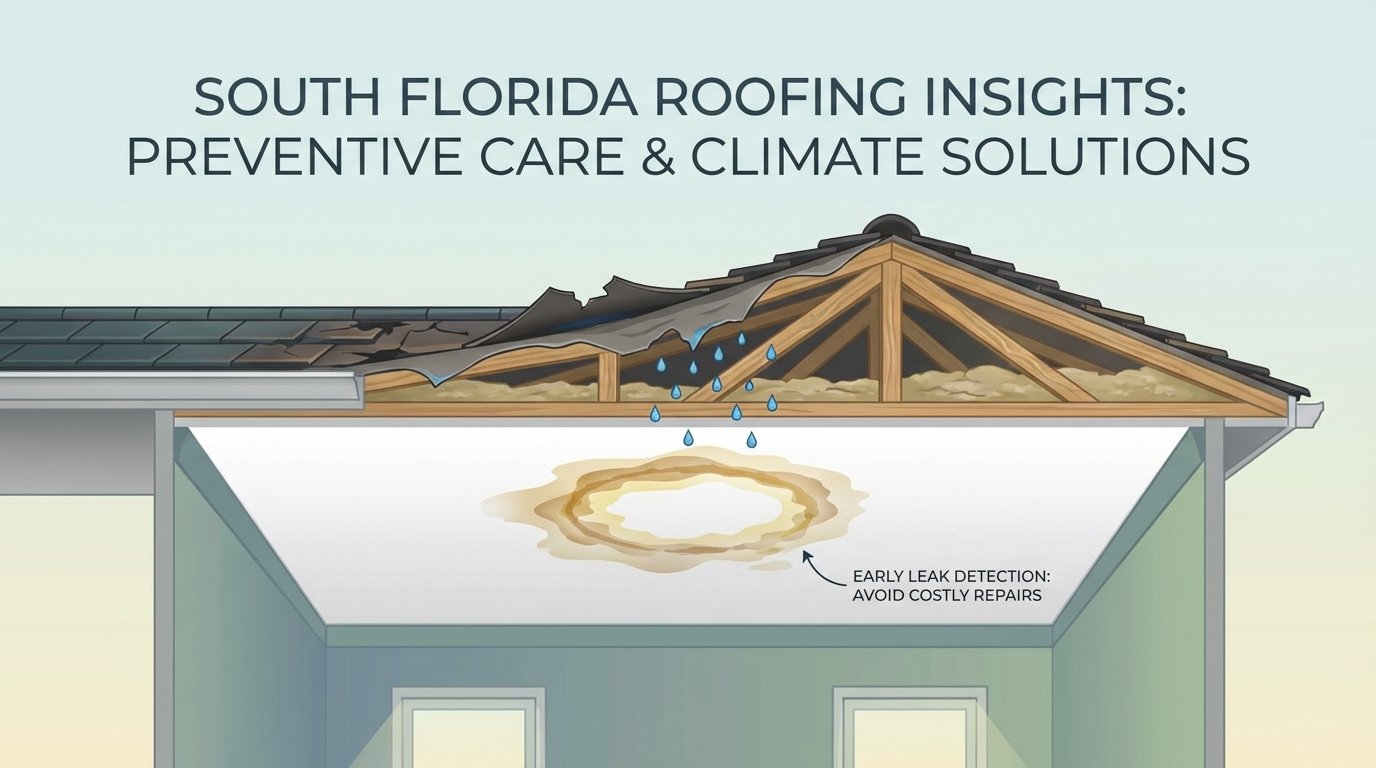
Water stains are your roof’s most obvious cry for help. These discolored patches on your ceiling or upper walls typically appear as brown, yellow, or copper-colored rings. Sometimes they’re obvious, sometimes they’re subtle, but they always mean the same thing: water is getting where it shouldn’t be.
Here’s what many homeowners don’t realize: the water stain you see on your ceiling might be several feet away from the actual leak point. Water can travel along rafters, trusses, and sheathing before finally dripping down and creating that visible stain. This is why roof leak repair requires detective work, not just slapping some sealant on the most obvious spot.
In South Florida’s heavy rain season, even a small leak can quickly escalate. That moisture creates the perfect environment for mold growth, wood rot, and compromised insulation. The good news? Not every water stain means you need a new roof. Often, targeted repairs can solve the problem completely, especially if you catch it early. A thorough inspection can identify whether you’re dealing with a simple flashing issue, a few damaged shingles, or something more extensive.
2. Missing, Cracked, or Curling Shingles
After a storm rolls through Fort Lauderdale or Pompano Beach, take a walk around your property and look up at your roof. Missing shingles are easy to spot—they leave bare patches that expose your underlayment to the elements. But cracked and curling shingles can be just as problematic, even if they’re still technically attached to your roof.
Shingles curl for several reasons in our climate. The intense UV exposure literally bakes the asphalt, causing it to lose its flexibility and protective oils. Poor attic ventilation traps heat, cooking your shingles from below. Sometimes it’s simply age—shingles have a lifespan, and in South Florida’s harsh conditions, they often reach their limit faster than the manufacturer’s warranty suggests.
The risk with damaged shingles isn’t just cosmetic. Each compromised shingle is an entry point for wind-driven rain. During hurricane season, wind can get under damaged shingles and peel back entire sections of your roof. If you’re noticing widespread shingle damage across your entire roof, replacement might be the most cost-effective long-term solution. But if the damage is isolated to one slope or section, strategic repairs can extend your roof’s life for years.
3. Granules Collecting in Gutters
Those small, sand-like granules you find in your gutters aren’t just debris—they’re actually protective material from your shingles. A few granules are normal, especially on a newer roof that’s still shedding excess. But if you’re scooping out handfuls of granules or noticing bald spots on your shingles, that’s a clear warning sign.
These granules protect your shingles from UV damage and help reflect heat. When they’re gone, your shingles deteriorate rapidly. This is especially true in South Florida where sun exposure is relentless year-round. Once shingles lose their granules, they become brittle, crack more easily, and fail to protect your home effectively.
Check your gutters after heavy rains and clean them out seasonally. If you’re consistently finding significant granule buildup, it’s time for a professional assessment. Depending on the extent of granule loss, you might need to plan for replacement within the next year or two, or you might have isolated damage that responds well to targeted repairs.
4. Sagging Roof Deck
A sagging roof is never something to postpone addressing. When your roof deck sags, it indicates serious structural issues—typically water damage that’s compromised the decking, rafters, or trusses. This isn’t a cosmetic problem; it’s a safety concern that requires immediate attention.
From inside your attic, look for sagging between the rafters or areas where the decking appears to dip. From outside, step back and look at your roofline. It should be straight. Any dips, waves, or drooping sections indicate structural problems. In South Florida’s humid environment, even small leaks can cause significant wood rot over time, especially if they go unnoticed.
Sagging usually means you’re beyond simple repairs. The damaged decking needs replacement, and depending on the extent of rot, you might need structural repairs as well. This is one situation where trying to patch things up rarely works. However, catching it early means containing the damage to a specific section rather than discovering that water has compromised your entire roof structure.
5. Damaged or Improperly Sealed Flashing
Flashing is the metal or waterproof material installed around roof penetrations—chimneys, vent pipes, skylights, and where your roof meets walls or dormers. It’s essentially your roof’s first line of defense at these vulnerable transition points. When flashing fails, water finds its way in, often causing extensive damage before you even notice a problem.
Common flashing problems include rust, cracks, gaps where sealant has deteriorated, and sections that have pulled away from the roof or wall. Storm damage roof repair frequently involves fixing or replacing damaged flashing that’s been compromised by high winds. Sometimes the flashing itself is fine, but the sealant around it has dried out and cracked under our intense sun.
The good news about flashing issues? They’re often very repairable. Re-sealing or replacing flashing is a relatively straightforward job that prevents much bigger problems. If you’re seeing water stains near chimneys, vents, or skylights, flashing is the likely culprit. This is exactly the type of issue where a repair makes much more sense than replacing your entire roof.
6. Daylight Through Roof Boards or Increased Energy Bills
Head up to your attic during the day and turn off any lights. Can you see daylight coming through your roof boards? Those tiny points of light represent gaps where water can enter. While a few pinholes might not seem alarming, they indicate that your roof’s integrity is compromised.
Another less obvious sign is a sudden increase in your cooling costs. In South Florida, we rely on air conditioning year-round, but if your bills spike without explanation, your roof might be the culprit. Poor roof ventilation, inadequate insulation, or gaps that let cool air escape all force your HVAC system to work overtime.
Sometimes addressing ventilation and insulation issues is a standalone project that extends your existing roof’s life significantly. You don’t always need a new roof—you might just need to improve your attic’s ventilation system or upgrade insulation. A thorough assessment can identify whether you’re dealing with roof failure or efficiency problems that have their own solutions.
7. Your Roof is Approaching 20 Years Old
Age matters, especially in South Florida. A roof in Minnesota might last 30 years, but that same roof system here faces conditions that accelerate aging. By the time your roof hits 15-20 years old, it’s time for serious evaluation, even if you’re not seeing obvious problems.
This doesn’t automatically mean replacement. A comprehensive inspection might reveal that your roof has plenty of life left with some preventive maintenance. Maybe you need some targeted repairs, improved ventilation, or simply a professional cleaning to remove algae and debris that’s holding moisture against your shingles.
However, if your roof is approaching 20 years and you’re also seeing several other signs on this list, replacement probably makes more financial sense than continuing to invest in repairs. The key is getting an honest assessment from someone who will give you the full picture—what needs immediate attention, what can wait, and what your realistic timeline looks like.
What to Do When You Notice These Signs
Spotting these warning signs is just the first step. Here’s what you should actually do:
- Document everything: Take photos of visible damage, water stains, and problem areas. This helps when discussing issues with contractors and may be necessary for insurance claims if storm damage is involved.
- Don’t panic into decisions: Unless you have a sagging roof or active leak causing interior damage, you have time to make informed decisions. Get multiple opinions if needed.
- Consider temporary measures: If you’ve discovered problems but can’t address them immediately, ask about temporary solutions that prevent the damage from worsening.
- Get a thorough inspection: A proper inspection examines your entire roofing system—not just the shingles, but decking, flashing, ventilation, and structural components.
- Ask about all your options: A trustworthy contractor will discuss repair options alongside replacement, helping you understand the cost-benefit of each approach.
Roof Repair Fort Lauderdale and Pompano Beach: Finding the Right Help
When you need roof repair in Fort Lauderdale, Pompano Beach, or anywhere in South Florida, you deserve straight answers. Not every problem requires a complete roof replacement, and any contractor who immediately pushes for the most expensive option without explaining alternatives isn’t acting in your best interest.
Look for contractors who take time to explain what they find, show you the actual problems, and discuss multiple solutions with transparent pricing. Storm damage roof repair often qualifies for insurance coverage, so working with a contractor experienced in the claims process can make a significant difference in your out-of-pocket costs.
Take Action Before Small Problems Become Big Ones
Your roof is too important to ignore, but recognizing warning signs and addressing them promptly doesn’t mean you need to rush into expensive decisions. Whether you’re dealing with minor leaks, aging shingles, or storm damage, the right approach is a thorough assessment followed by honest recommendations that respect your budget and your home’s actual needs.
If you’ve noticed any of these seven warning signs, don’t wait for the next storm season to roll around. Contact us for a comprehensive roof inspection. We’ll give you a clear picture of your roof’s condition, explain exactly what needs attention now versus later, and provide transparent pricing for all your options—from targeted repairs to complete replacement. After 70 years of serving South Florida families, we’ve built our reputation on honesty and quality work, not high-pressure sales tactics.
Call us today to schedule your inspection. Let’s figure out together what your roof actually needs and create a plan that works for your home and your budget.