
You’ve noticed water stains on your office ceiling or spotted damaged membrane after the last storm. Now you’re facing the reality of commercial roof repair in South Florida, but what actually happens when you call a roofer? If you’re skeptical about the process—and rightfully so after hearing horror stories about contractors—you deserve to know exactly what goes on from that first phone call to the final invoice.
After seven decades working on South Florida commercial roofs, we’ve seen how transparency builds trust. Let’s walk through what really happens during a commercial roof repair project, without the sales pitch or technical jargon that leaves you more confused than informed.
The Initial Assessment: More Than Just Looking at Your Roof
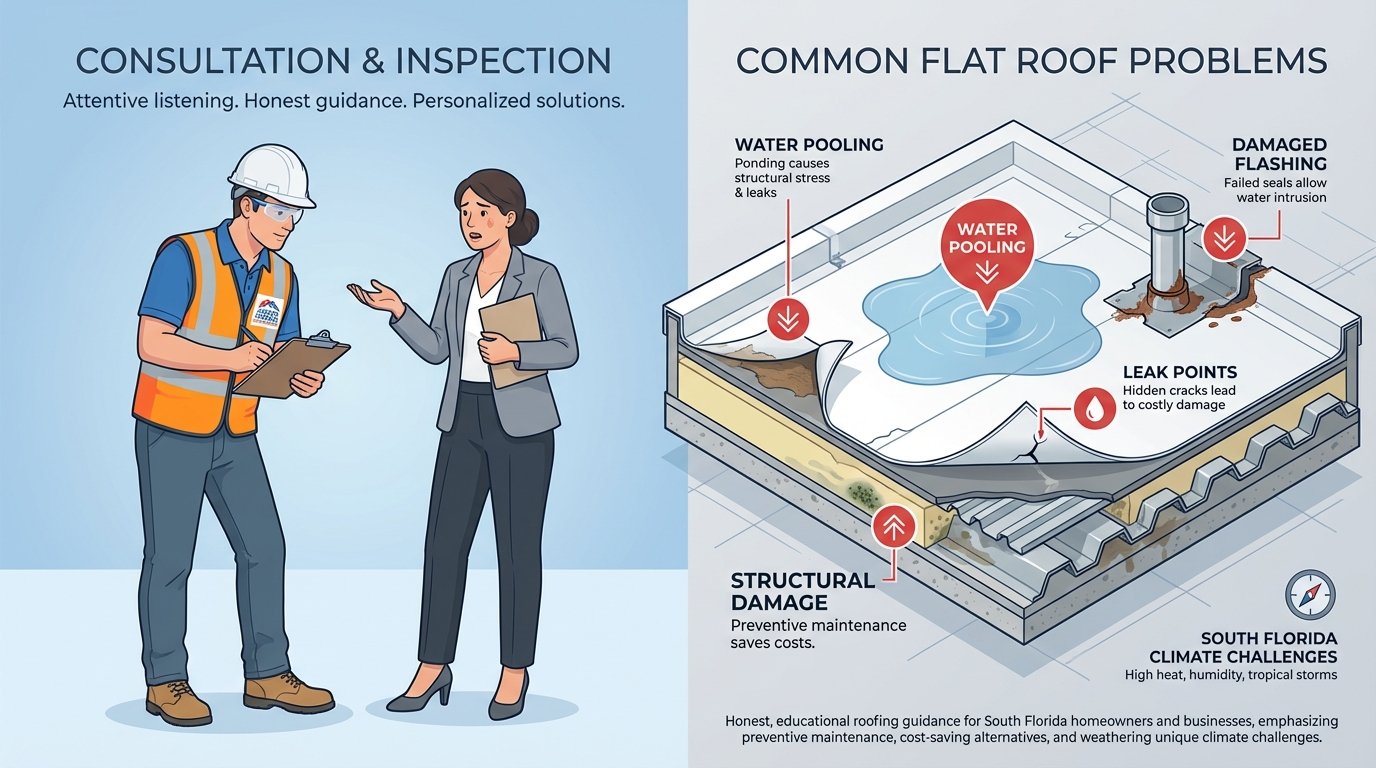
When you contact a trusted commercial roofer in Pompano Beach or anywhere in Broward County, the process should start with listening, not selling. A reputable contractor asks about your specific concerns: Where’s the leak occurring? When did you first notice it? Has there been recent storm damage?
During the initial visit, an experienced roofer examines far more than the obvious problem spot. They’re checking:
- The overall roof membrane condition and any areas showing UV degradation
- Drainage systems and whether water is pooling anywhere
- Flashing around HVAC units, vents, and roof penetrations
- Seams and edges where wind-driven rain typically infiltrates
- Interior damage to understand the leak’s full impact
This assessment takes time because South Florida’s unique environment—salt air, intense UV exposure, afternoon thunderstorms, and hurricane threats—creates problems that compound quickly if not properly identified. A small leak today becomes structural damage tomorrow.
Here’s what separates honest contractors from problematic ones: they’ll tell you if repair makes sense or if you’re throwing money at a roof that needs replacement. Sometimes a $3,000 repair buys you five more years. Sometimes it’s just delaying the inevitable by six months. You deserve that honest assessment.
The Proposal: Understanding Your Options and Costs
A detailed proposal for business roof leak repair in Pompano Beach or throughout Broward County should present multiple options, not just the most expensive solution. Expect to see:
Immediate repairs: Addressing the active leak and preventing further interior damage. This is your stop-gap solution if budget is tight or you’re evaluating long-term plans for the property.
Comprehensive repairs: Fixing the current issue plus addressing related problem areas that will likely fail soon. This approach typically offers better value because mobilization costs are covered once.
Maintenance recommendations: Commercial roofing maintenance in Broward County isn’t optional—it’s essential. Regular inspections and minor repairs prevent emergency situations that always cost more and happen at the worst possible time.
Cost-effective commercial roof repair means getting the most life from your investment, not just choosing the cheapest option. A quality contractor explains the cost difference between options and helps you understand what you’re actually paying for: materials, labor, warranty coverage, and expertise.
Scheduling and Preparation: Minimizing Business Disruption
Once you approve the work, logistics matter tremendously for commercial properties. You can’t shut down operations for days, and your customers or tenants shouldn’t face disruption.
Professional commercial roof repair in South Florida involves careful scheduling around:
- Weather patterns (afternoon storms are predictable; hurricanes less so)
- Your business hours and peak traffic times
- Access requirements for equipment and materials
- Noise concerns if you have office space or retail below
The contractor should communicate exactly what happens each day, where crews will work, and how they’ll protect your property. Expect discussions about parking for work vehicles, material delivery timing, and how they’ll secure the roof if work extends beyond one day.
For active leaks, temporary measures come first. No responsible contractor leaves you vulnerable to the next rainstorm while waiting for materials to arrive. Tarping or temporary patching provides immediate protection, even if it’s not the permanent solution.
The Actual Repair Work: Step by Step
Here’s what actually happens when crews arrive for a typical flat roof repair on a South Florida commercial building:
Day One: Preparation and Damage Assessment
Crews set up safety equipment first—this isn’t negotiable on commercial projects. They establish work zones, set up ladders or lifts, and ensure nobody accidentally wanders into a construction area.
Next comes detailed inspection of the repair area. What looked like isolated damage from ground level often reveals additional problems once you’re on the roof examining it closely. Honest contractors inform you immediately if they discover issues beyond the original scope. You shouldn’t get surprise charges, but you should get updates about what they’re finding.
Removing Damaged Materials
Depending on your roof type—TPO, modified bitumen, built-up roofing, or metal—crews carefully remove damaged sections. This isn’t demolition; it’s surgical removal to preserve surrounding good material.
They’re checking the substrate underneath, too. Water damage doesn’t stop at the membrane. If decking is compromised, that gets addressed now. Skipping this step to save money today creates bigger problems within months.
Addressing the Root Cause
This separates experienced commercial roofers from those just patching symptoms. If the leak resulted from poor drainage, they’re discussing drainage improvements. If flashing failed, they’re examining why—improper installation originally, material failure, or structural movement.
South Florida’s building movement from heat expansion, ground settling, and hurricane exposure means roofs need flexibility. Rigid repairs crack. Proper commercial roof repair accounts for this movement.
Installing New Materials
Quality matters enormously here. The membrane going down should match or exceed your existing roof specifications. Adhesives must be appropriate for Florida’s heat—some products work fine in northern climates but fail here.
Seaming and flashing receive extra attention because these are always the vulnerable points. Water finds its way through the smallest gap, and South Florida delivers water horizontally during storms, not just from above.
Quality Control and Testing
Before declaring the job complete, thorough contractors test their work. For leak repairs, this might involve water testing—literally flooding the area to ensure water flows where it should and doesn’t penetrate where they’ve worked.
They’re also checking that all fasteners are secure, seams are properly sealed, and the area is clean. Material scraps or debris left on a flat roof block drainage and create new problems.
The Timeline Reality: Weather and Unexpected Discoveries
South Florida weather dictates commercial roofing schedules. A repair projected for two days might stretch to four if afternoon storms roll in. Reputable contractors don’t work in rain—you can’t properly seal roofing materials when everything’s wet.
Unexpected discoveries also extend timelines. Finding rotted decking underneath damaged membrane adds time and cost, but ignoring it guarantees failure. This is where contractor integrity shows: do they document what they found, explain why additional work is necessary, and price it fairly?
Throughout the project, you should receive updates. Not daily novels, but communication about progress, any issues discovered, and adjusted timelines if needed.
After Completion: Documentation and Maintenance
When work finishes, you should receive:
- Detailed documentation of work performed
- Warranty information for materials and labor
- Photos of the repair (before, during, after)
- Maintenance recommendations specific to your roof
- A clear invoice matching the approved proposal
This documentation matters for your records, future roof work, and if you sell the property. It also establishes the baseline for ongoing commercial roofing maintenance in Broward County.
Speaking of maintenance: the repair project should conclude with a conversation about prevention. How often should your roof be inspected? What signs should prompt immediate calls? Are there minor maintenance tasks your staff can handle?
Twice-yearly inspections catch small problems before they become emergency repairs. After major storms, even if you see no obvious damage, have a professional examine your roof. Wind can compromise seals and flashing without creating immediate leaks.
Red Flags: What Shouldn’t Happen
You’re rightly skeptical about contractors, so here are warning signs of problems:
- Pressure to decide immediately or “special pricing today only”
- Vague proposals without specific materials or scope details
- Requests for large upfront payments before work begins
- Reluctance to provide references or proof of licensing and insurance
- Crews showing up unannounced or different from who you met
- Significant price increases mid-project without clear explanation
Quality commercial roof repair in South Florida costs what it costs. Dramatically low bids usually mean shortcuts you’ll pay for later. Dramatically high bids might mean you’re subsidizing inefficiency or excessive overhead.
The Cost Factor: What’s Reasonable?
Business roof leak repair costs vary based on damage extent, roof type, access difficulty, and material quality. Small repairs might run $1,500 to $3,000. Extensive repairs involving multiple areas or substrate replacement can reach $10,000 or more.
Cost-effective commercial roof repair doesn’t mean cheap—it means appropriate solutions that maximize your roof’s lifespan without unnecessary expenses. Sometimes the mid-range option provides the best value. Sometimes investing more upfront saves significantly over time.
A trustworthy contractor discusses these trade-offs openly. They understand you’re balancing immediate costs against long-term building needs. They’re not offended by budget constraints—they work within them while being honest about what’s achievable.
Working With Experienced South Florida Commercial Roofers
Seventy-plus years working on commercial roofs throughout Broward County taught us that every building and every business owner has unique needs. Cookie-cutter solutions fail here. The warehouse roof in Deerfield Beach faces different challenges than the retail center in Fort Lauderdale, even though they’re just miles apart.
What matters most? Finding a commercial roofer who listens, evaluates honestly, provides clear options, executes quality work, and stands behind their repairs long after collecting payment. That relationship-focused approach—not transactional thinking—is how family-owned roofing companies survive seven decades in a competitive market.
Your commercial roof protects significant investment in property, inventory, and business operations. When problems arise, you need straight answers and quality solutions, not high-pressure sales tactics or the cheapest quick fix that fails during the next storm season.
Next Steps for Your Commercial Roof
If you’re dealing with leaks, storm damage, or just want to assess your commercial roof’s condition before problems start, schedule an honest evaluation. Look for contractors willing to discuss repair and maintenance options before jumping to replacement recommendations.
Ask specific questions: How long will this repair last? What maintenance extends that lifespan? What are the warning signs this approach isn’t working? Quality contractors appreciate informed customers who ask tough questions.
For commercial property owners throughout Pompano Beach, Fort Lauderdale, and Broward County, understanding what really happens during roof repairs removes uncertainty from a stressful situation. You’re making better decisions when you know what to expect, what’s normal, and what signals problems.
Don’t wait until minor issues become major emergencies. South Florida’s climate doesn’t forgive neglect, but proper repairs and consistent maintenance keep commercial roofs protecting your business year after year—through hurricane seasons, summer heat, and everything else our weather delivers.
Ready to address your commercial roofing concerns with a contractor who prioritizes your long-term interests over short-term sales? Reach out for a thorough assessment and honest conversation about your best options. No pressure, no gimmicks—just experienced guidance from roofers who’ll be here long after the work is done.