
When your commercial property needs roofing work in Florida, you’re trusting someone with a significant investment. But here’s what many property managers and business owners don’t realize: the certifications that make a commercial roofing contractor truly qualified in Florida go far beyond a simple business license. After seven decades working with South Florida commercial properties, we’ve seen firsthand how the difference between a properly certified contractor and someone cutting corners can mean the difference between a roof that protects your investment and one that becomes a liability.
Florida’s commercial roofing requirements have become increasingly rigorous in 2026, and for good reason. Our unique climate challenges—hurricane-force winds, relentless UV exposure, salt air corrosion, and extreme heat—demand contractors who understand both the technical and regulatory complexities of commercial roofing systems.
The Foundation: Florida State Licensing Requirements
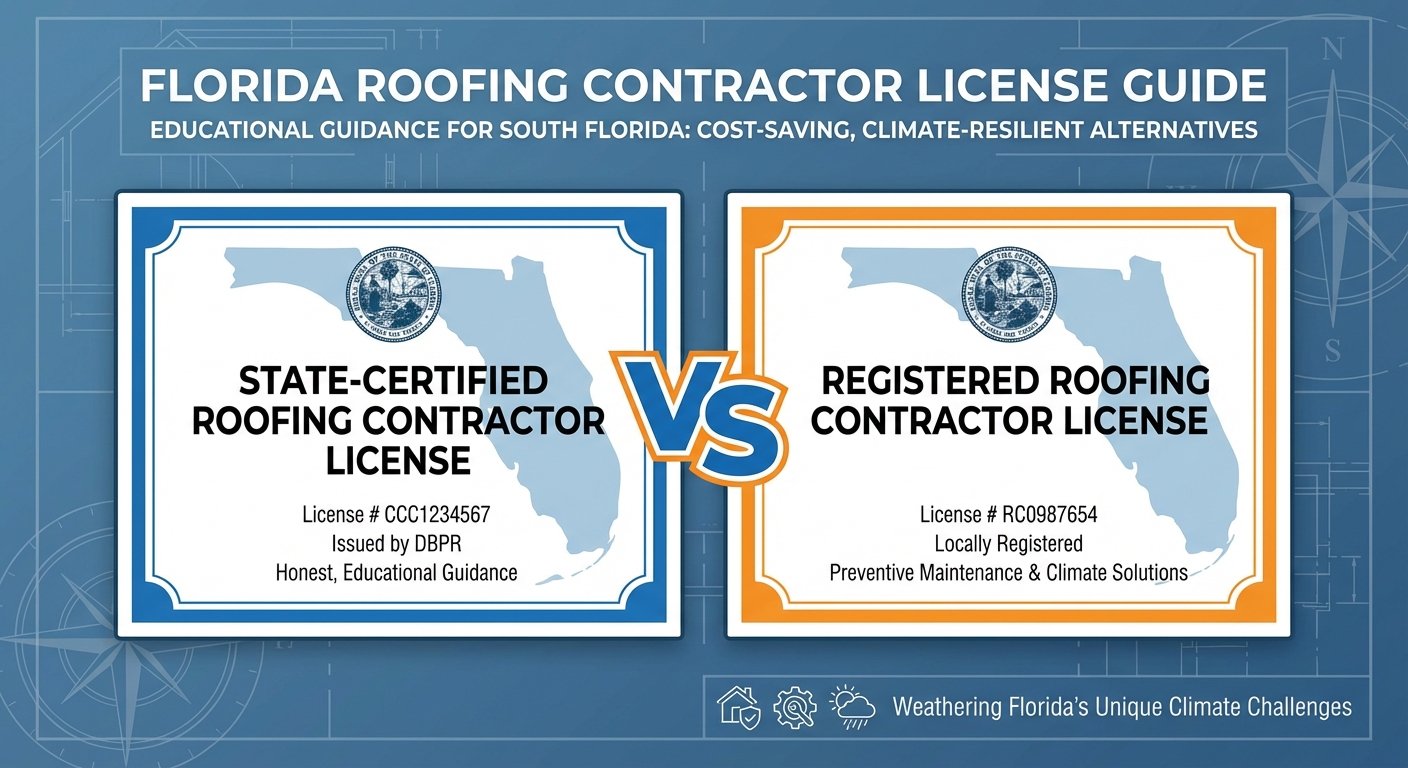
Let’s start with the baseline. In Florida, any commercial roofing contractor must hold either a state-certified roofing contractor license or a registered roofing contractor license. These aren’t interchangeable terms, and understanding the difference matters when you’re evaluating who to trust with your property.
A florida certified commercial roofer holds a state-certified license, which allows them to work anywhere in Florida without restrictions. To earn this certification, contractors must:
- Complete a four-year apprenticeship or demonstrate equivalent experience
- Pass a comprehensive state examination covering roofing systems, Florida Building Code, business practices, and safety regulations
- Provide proof of financial responsibility
- Carry minimum insurance coverage including general liability and workers’ compensation
- Submit to background checks and demonstrate good moral character
Registered contractors, by contrast, can only work within their local jurisdiction and have less stringent requirements. For commercial properties, you want the broader expertise and accountability that comes with state certification.
What’s New in 2026: Enhanced Building Code Compliance
Florida’s 2023 Building Code updates have been fully implemented as of 2026, with additional amendments specific to commercial roofing. These changes significantly impact what a commercial roofing contractor south florida must know and demonstrate.
The enhanced requirements focus on:
Wind resistance standards: Commercial roofs in South Florida now require documentation proving systems can withstand sustained winds of 175 mph in high-velocity hurricane zones. Your contractor must understand how to properly install and inspect roof systems that meet these specifications.
Energy efficiency mandates: Commercial buildings face stricter cool roof requirements in 2026. Contractors must demonstrate knowledge of reflective roofing materials, insulation standards, and how these systems integrate with HVAC efficiency.
Secondary water barriers: New requirements for underlayment and water barriers demand contractors understand multi-layer protection systems, not just surface installation.
Beyond Basic Licensing: Manufacturer Certifications That Matter
Here’s where many property managers get confused. A state license proves basic competency, but manufacturer certifications demonstrate specialized expertise with specific roofing systems.
When we work on commercial properties, we maintain current certifications from major manufacturers because each roofing system has unique installation requirements. A TPO roof installs differently than a modified bitumen system, which differs from a metal roof installation. Manufacturer certifications require:
- Attending hands-on training sessions updated annually
- Demonstrating proficiency with specific products and installation methods
- Maintaining quality standards verified through inspections
- Staying current on product updates and installation techniques
Why does this matter to you? Because most manufacturer warranties—which can be 15 to 30 years—are only valid when installed by certified contractors following exact specifications. We’ve evaluated properties where previous contractors claimed expertise they didn’t have, resulting in voided warranties and expensive repairs.
Insurance and Bonding: Protection You Can’t Skip
An honest roofing company carries comprehensive insurance that protects your property and your interests. In 2026, Florida requires commercial roofing contractors to maintain:
General liability insurance: Minimum $1 million per occurrence covering property damage and injuries. For commercial work, we recommend contractors carry at least $2 million in coverage.
Workers’ compensation insurance: This protects you from liability if workers are injured on your property. In Florida, contractors with four or more employees must carry workers’ comp. Verify this coverage before any work begins—if a contractor is injured on your property and they’re uninsured, you could face significant liability.
Commercial umbrella policies: Reputable business roofing contractor broward county companies carry additional umbrella coverage beyond basic requirements, typically $5 million or more. This demonstrates financial stability and commitment to protecting clients.
Always request current certificates of insurance directly from the contractor’s insurance company, not just copies they provide. We’ve seen cases where contractors showed expired or fraudulent insurance documents.
Continuing Education and Code Updates
Florida requires certified roofing contractors to complete continuing education hours every two years to maintain their licenses. For 2026, this includes mandatory courses on:
- Florida Building Code updates and amendments
- Wind mitigation and hurricane preparedness
- Business practices and contractor responsibilities
- Safety regulations and OSHA compliance
- Advanced roofing technologies and materials
A trusted commercial roofer pompano beach should readily provide proof of continuing education completion. This isn’t just bureaucratic paperwork—it demonstrates commitment to staying current with evolving standards and technologies.
OSHA Safety Certifications for Commercial Work
Commercial roofing involves significant safety considerations. In 2026, OSHA requirements for commercial roofing work have become more stringent, particularly regarding fall protection and heat safety protocols.
Look for contractors whose crews have completed:
- OSHA 30-hour construction safety certification for supervisors
- OSHA 10-hour certification for all crew members
- Specialized fall protection training
- Heat illness prevention certification (especially relevant in Florida)
These certifications protect workers and minimize liability for property owners. They also indicate a company that values its employees and operates professionally.
Local Business Credentials and Track Record
Certifications and licenses provide a foundation, but longevity and local reputation reveal character. When evaluating a commercial roofing contractor, research:
Years in business under the same ownership: Companies that have operated locally for decades demonstrate stability. We’ve weathered economic downturns, multiple hurricanes, and industry changes because we prioritize customer relationships over quick profits.
Better Business Bureau rating: Check for BBB accreditation and complaint history. In 2026, this information is readily available online and provides insight into how contractors handle problems.
Local building department relationships: Contractors who regularly work in your area maintain positive relationships with local building officials. They understand local permitting requirements and inspection processes.
References from similar properties: Ask for references from commercial properties similar to yours. A contractor experienced with retail buildings may not be the best choice for an industrial warehouse, and vice versa.
What to Ask Before Hiring
When interviewing potential contractors, ask these specific questions:
- “What’s your state contractor license number, and can I verify it’s current?” (Check it yourself on the Florida Department of Business and Professional Regulation website)
- “Which manufacturer certifications do you hold, and are they current for the roofing system you’re proposing?”
- “Can you provide certificates of insurance directly from your insurance carrier?”
- “How long have you operated under current ownership in South Florida?”
- “What continuing education have your team members completed in the past year?”
- “Can you provide references from commercial properties you’ve worked on in the past three years?”
- “How do you handle warranty work and ongoing maintenance?”
A properly certified, honest contractor welcomes these questions. If someone becomes defensive or evasive, that’s a significant red flag.
The Reality Check: Repairs vs. Replacement
Here’s where certification connects with honesty. A properly certified commercial roofing contractor understands roof systems well enough to know when repairs are appropriate versus when replacement is necessary.
We’ve evaluated countless commercial roofs where previous contractors pushed for complete replacement when targeted repairs and maintenance would have extended the roof’s life by years. Certifications mean we can accurately assess what your roof actually needs.
Sometimes a section needs attention while the rest remains sound. Other times, ongoing repairs become more expensive than replacement. An experienced, certified contractor provides honest guidance based on your property’s condition and your budget—not based on which option generates the highest commission.
Working With Certified Contractors: What to Expect
When you hire a properly certified contractor, expect:
Detailed written proposals: Specifications should reference specific building codes, manufacturer requirements, and warranty terms. Vague proposals suggest inexperience or dishonesty.
Proper permitting: Commercial roofing work requires permits. Contractors who suggest skipping permits to save money are risking your property and violating the law.
Regular communication: Professional contractors provide project timelines, update you on progress, and address concerns promptly.
Documented inspections: Throughout the project, certified contractors conduct and document inspections to ensure work meets code and manufacturer requirements.
Comprehensive warranties: You should receive both manufacturer material warranties and contractor workmanship warranties in writing.
Moving Forward With Confidence
Understanding what makes a commercial roofing contractor truly certified in Florida empowers you to make informed decisions. The right certifications protect your investment, ensure quality work, and provide recourse if problems arise.
After 70+ years working with commercial properties throughout South Florida, we’ve built our reputation on transparency and expertise. We maintain every certification discussed in this article—not because they’re required, but because they make us better contractors and protect our customers.
If you’re evaluating your commercial roof or planning upcoming work, we’re happy to provide a honest assessment without pressure. We’ll explain what your roof needs, why it needs it, and give you options that respect your budget. Whether that’s maintenance, targeted repairs, or full replacement, our recommendation will be based on your property’s actual condition and your long-term interests.
Contact us for a comprehensive roof evaluation. We’ll verify our certifications, explain our recommendations in straightforward terms, and provide references from commercial properties throughout Broward County. You deserve a contractor whose certifications mean something and whose word you can trust.