
How to Choose Hurricane Resistant Roofing for Your South Florida Home
Living in South Florida means accepting that powerful hurricanes aren’t a question of “if” but “when.” Your roof is the first line of defense when winds reach triple digits and driving rain tests every vulnerable point in your home’s structure. After seven decades of installing and repairing roofs through countless hurricanes, we’ve seen firsthand what works, what fails, and why making the right choice now can save you from catastrophic damage later.
Choosing hurricane resistant roofing for your South Florida home isn’t just about picking materials that look good or fit your budget. It’s about understanding how different roofing systems perform under extreme conditions, knowing which installation methods actually protect your home, and recognizing that proper installation matters more than the materials themselves.
Understanding South Florida’s Unique Roofing Challenges
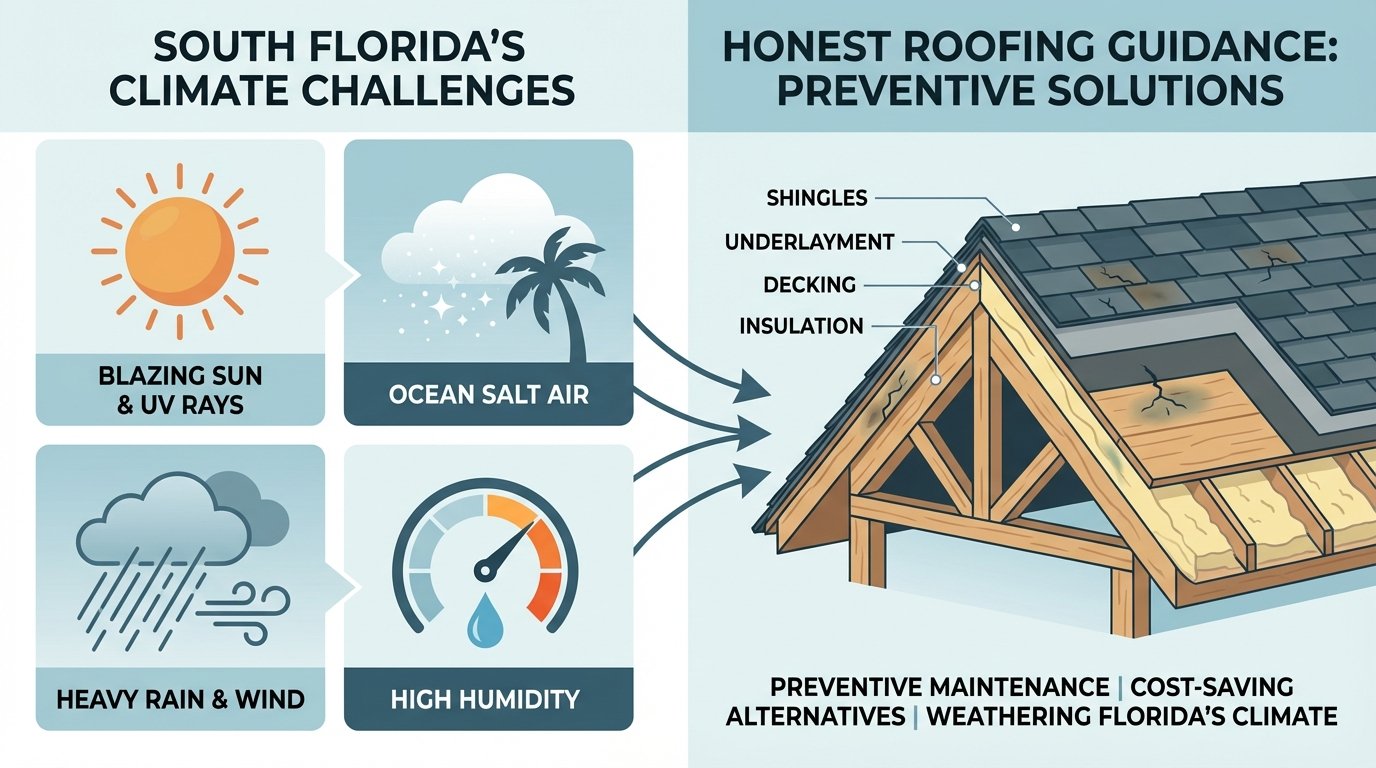
South Florida puts roofs through conditions that most other regions never experience. The combination of intense UV exposure, salt air corrosion, severe humidity, temperature extremes, and hurricane-force winds creates a perfect storm of stress on roofing materials.
We’ve inspected thousands of roofs after major storms, and the difference between homes with minimal damage and those with catastrophic failure usually comes down to three factors: material selection, installation quality, and ongoing maintenance. Even the best hurricane resistant roofing south florida can offer will fail if installed incorrectly or neglected over time.
The building codes in South Florida exist for good reason. After Hurricane Andrew devastated the region in 1992, code requirements became significantly stricter. Today’s standards require roofs to withstand wind speeds of 140-180 mph depending on your specific location and proximity to the coast. But meeting minimum code is just that—minimum. Smart homeowners often choose materials and installation methods that exceed code requirements.
Metal Roofing: The Hurricane Champion
When homeowners ask us what roofing material performs best in hurricanes, the answer is consistently metal. As a metal roofing contractor pompano beach property owners trust, we’ve seen metal roofs survive Category 5 hurricanes with minimal damage while neighboring homes with other materials suffered complete roof failures.
Why Metal Excels in Hurricane Conditions
Metal roofing systems resist high winds better than virtually any other residential roofing material. The interlocking panel design and continuous attachment to the roof deck create a barrier that wind simply cannot penetrate or lift. Unlike individual shingles or tiles that can be pulled off one by one, metal roofing acts as a unified shield.
Standing seam metal roofs, which feature raised seams running vertically, offer exceptional wind resistance because they have no exposed fasteners. The panels lock together and attach through concealed clips, eliminating weak points where wind can gain purchase. We’ve inspected standing seam metal roofs after major hurricanes where homes all around sustained significant damage, and these roofs looked virtually untouched.
Metal roofing also handles South Florida’s other challenges exceptionally well. It reflects solar heat rather than absorbing it, which can reduce cooling costs by 20-30%. It’s completely impervious to rot, mold, and insect damage. Salt air doesn’t affect modern coated metal roofing systems. And metal roofs typically last 40-70 years with minimal maintenance—often outlasting the homeowner’s mortgage.
Understanding Metal Roofing Investment
Metal roofing costs more upfront than asphalt shingles, typically 2-3 times more for materials and installation. However, when you factor in longevity, energy savings, reduced maintenance, and insurance discounts many carriers offer for metal roofs, the lifetime cost often favors metal significantly.
If budget is a concern right now, consider whether your current roof might be repairable for another few years while you save for a metal roof replacement. We’d rather be honest about that than push you toward a less protective option you’ll regret when the next major hurricane approaches.
Concrete and Clay Tile: Traditional Protection with Considerations
Tile roof installation florida has been popular for generations, and for good reason. Tile roofs offer excellent hurricane protection when properly installed, along with outstanding longevity and a classic aesthetic many homeowners love.
Concrete and clay tiles are extremely heavy and dense, making them naturally wind-resistant. They’re also fireproof, won’t rot, and handle UV exposure and salt air beautifully. A properly installed tile roof can easily last 50 years or more in South Florida conditions.
The Critical Importance of Proper Tile Installation
Here’s what many homeowners don’t realize: tile roofing’s hurricane resistance depends entirely on installation quality. Each tile must be mechanically fastened—not just laid in place with minimal attachment. We’ve seen too many tile roofs where contractors cut corners on fastening, resulting in tiles becoming dangerous projectiles during hurricanes.
Modern hurricane-resistant tile installation requires foam adhesive between tiles in addition to mechanical fasteners. This creates a unified system that dramatically improves wind resistance. If you’re considering tile, make sure your contractor follows current best practices, not outdated installation methods.
The other consideration with tile is weight. Your home’s structure must be engineered to support tile roofing, which weighs 850-1,100 pounds per square (100 square feet). If you’re replacing a lighter roof with tile, you may need structural reinforcement, which adds to the project cost.
Asphalt Shingles: Practical Protection with Modern Improvements
Asphalt shingle installation south florida remains popular because it offers reasonable hurricane protection at the most accessible price point. Modern architectural shingles rated for high winds are a completely different product than basic three-tab shingles from years past.
Look for shingles rated for winds of at least 130 mph, though 150+ mph-rated shingles are available and worth considering for superior protection. High-wind shingles feature special adhesive strips and heavier construction that helps them stay attached during severe weather.
Installation Quality Makes or Breaks Shingle Performance
The dirty secret about asphalt shingles is that installation quality matters more than the shingle brand. We’ve seen premium shingles fail catastrophically because of poor installation, and we’ve seen properly installed mid-grade shingles survive major hurricanes with minimal damage.
Proper asphalt shingle installation for hurricane resistance requires six nails per shingle (not four), correct nail placement, proper starter strip installation, adequate roof deck attachment, and high-quality underlayment. These details aren’t visible once the roof is complete, which is why choosing an experienced residential roofing contractor pompano beach homeowners can trust is essential.
Asphalt shingles typically last 20-30 years in South Florida, significantly less than metal or tile. The intense UV exposure and heat take their toll. Plan on replacement within this timeframe, and factor that into your long-term cost calculations.
Beyond Materials: What Actually Protects Your Home
After installing and repairing roofs through dozens of hurricanes, we can tell you that the best hurricane resistant roofing south florida offers isn’t just about the surface material you see. The complete roofing system determines whether your home stays protected or sustains catastrophic damage.
Roof Deck Attachment
Your roof decking (typically plywood or OSB sheathing) must be properly attached to the roof framing. Building codes now require specific nailing patterns with ring-shank nails, but older homes may have inadequate attachment. When planning new roof installation south florida, ask about roof deck inspection and reinforcement if needed.
Underlayment Selection
The waterproof underlayment between your roof deck and surface material is your home’s second line of defense if surface materials are damaged. Synthetic underlayment dramatically outperforms traditional felt paper, especially in hurricane conditions. Self-adhering underlayment in vulnerable areas like valleys and edges provides additional protection.
Proper Ventilation and Attic Pressure
Hurricanes create dramatic pressure changes. Without proper ventilation, pressure can build up inside your attic and actually blow your roof off from the inside. Adequate intake and exhaust ventilation helps equalize pressure and protects your roof structure.
Edge and Penetration Details
The edges of your roof and areas around vents, chimneys, and skylights are where wind-driven rain most often enters. Proper flashing, sealed fasteners, and careful detail work in these vulnerable areas prevent water intrusion even when surface materials are stressed.
Maintenance: Your Best Investment for Hurricane Protection
The most hurricane-resistant roof won’t protect your home if you neglect maintenance. We recommend annual inspections, especially before hurricane season begins in June. Small issues like loose fasteners, damaged flashing, or deteriorated sealants are inexpensive to fix but can lead to catastrophic damage if ignored.
After any significant storm, even if you don’t see obvious damage, have a professional inspection. Minor damage that seems insignificant can worsen quickly in our harsh climate and leave your roof vulnerable when the next storm arrives.
Keep your roof clean and free of debris. Leaves and branches trap moisture and can become projectiles in high winds. Trim overhanging tree branches before hurricane season—they’re dangerous to both your roof and your family during storms.
Making Your Decision: Balancing Protection, Budget, and Long-Term Value
Choosing the right hurricane-resistant roofing for your South Florida home means balancing several factors. Metal roofing offers the best protection and longest lifespan but requires the highest upfront investment. Tile provides excellent protection and longevity with a traditional look, but requires proper structural support. Asphalt shingles offer good protection at the most accessible price point but need replacement more frequently.
Consider your long-term plans. If you’re planning to stay in your home for decades, investing in metal or tile makes financial sense. If you might move within ten years, quality asphalt shingles might be the practical choice.
Don’t forget about insurance implications. Many carriers offer discounts for impact-resistant and wind-resistant roofing. Some discounts can offset a significant portion of the additional cost of premium roofing materials over time.
Next Steps: Getting It Right the First Time
Your roof is too important to trust to the lowest bidder or a contractor who won’t be around when you need warranty service. Look for established companies with deep local roots, proper licensing and insurance, and a track record you can verify through references and reviews.
Get multiple detailed quotes that specify materials, installation methods, and warranty coverage. The cheapest quote often means cut corners that will cost you later. Ask contractors specific questions about deck attachment, underlayment, fastening methods, and detail work around vulnerable areas.
If you’re not ready for a complete roof replacement but want to improve hurricane protection, ask about upgrades. Sometimes strategic reinforcement, improved flashing, or securing loose materials can significantly improve your existing roof’s storm resistance while you plan for eventual replacement.
We’ve spent over seventy years protecting South Florida homes because we treat every roof like it’s protecting our own family. We know that honest advice, quality installation, and standing behind our work builds the long-term relationships that matter more than any single sale.
If you’re ready to discuss hurricane-resistant roofing options for your home, we’ll give you straightforward answers about what will work best for your situation and budget. Contact us for a detailed inspection and honest assessment—no pressure, just the information you need to make the right decision for protecting your home and family.