
Most manufacturers advertise impressive lifespan numbers for their roofing materials, but those estimates rarely account for what South Florida’s brutal environment does to your roof. After seven decades working with roofs throughout Broward County and the surrounding areas, we’ve seen firsthand how our unique climate dramatically impacts how long different materials actually last.
Understanding realistic lifespans for roofing materials in our region isn’t just about planning your budget—it’s about making informed decisions that protect your investment and avoid premature replacements. Let’s break down what you can genuinely expect from each roofing type in South Florida’s challenging conditions.
Why South Florida Destroys Roofs Faster Than Anywhere Else
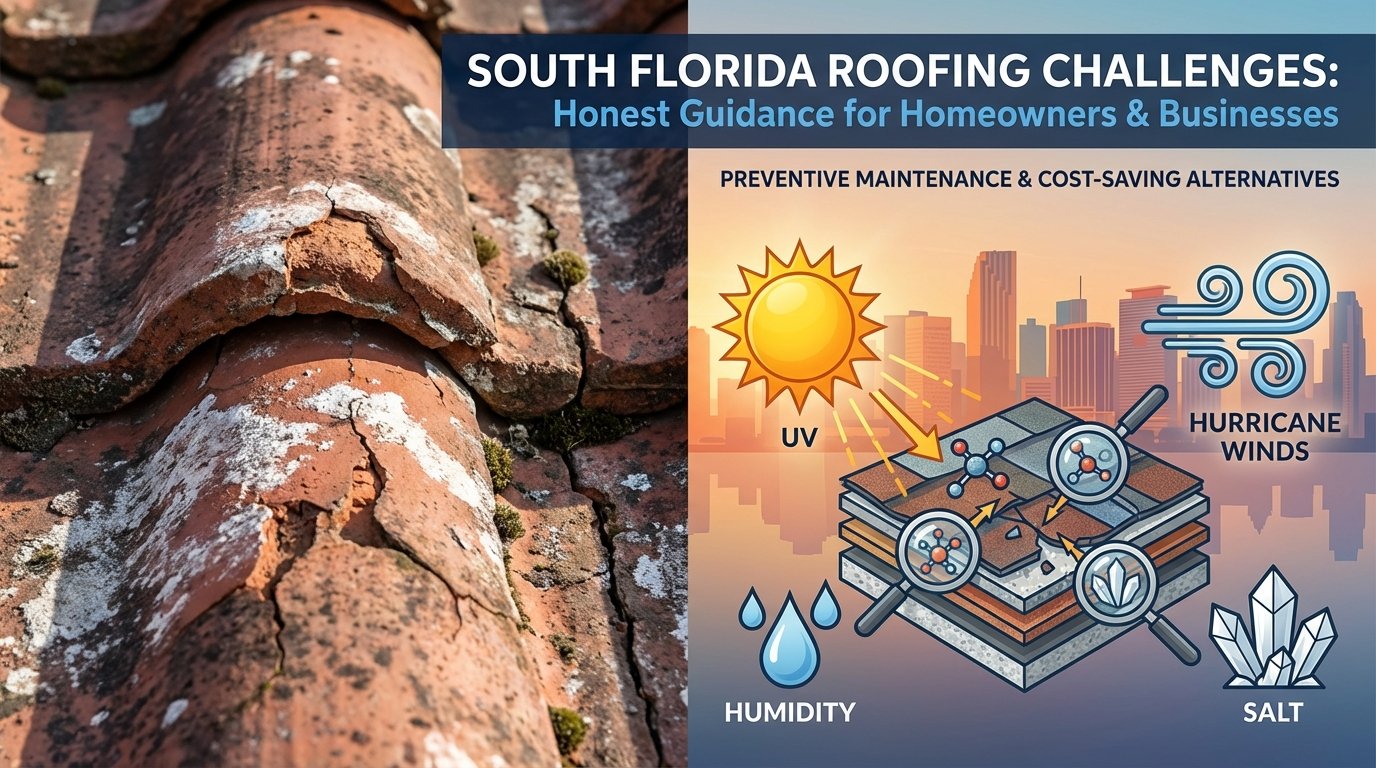
Before diving into specific materials, you need to understand what makes our climate so different. South Florida combines several roof-damaging factors that other regions simply don’t experience simultaneously:
- Relentless UV exposure: Our sun beats down 300+ days per year, breaking down roofing materials at an accelerated rate
- Extreme heat and humidity: Temperatures regularly exceed 90°F with humidity levels that promote algae, mold, and material degradation
- Salt air corrosion: Coastal properties face constant salt exposure that attacks metal components and accelerates wear
- Hurricane-force winds: We’re not talking about occasional storms—we face sustained wind threats every season that test structural integrity
- Thermal cycling: Daily temperature swings cause expansion and contraction that gradually loosens fasteners and cracks materials
- Heavy rainfall: Intense downpours test waterproofing systems beyond what manufacturers anticipate
These factors working together mean a roof rated for 30 years in Colorado might only last 20 years here. That’s not a defect—it’s reality. Any honest residential roofing contractor in Pompano Beach will tell you the same thing.
Asphalt Shingles: The Most Common Choice With the Shortest Lifespan
Asphalt shingles dominate residential roofing across America because they’re affordable and easy to install. In South Florida, however, they’re fighting an uphill battle against our climate.
Realistic South Florida Lifespan: 12-18 Years
Manufacturers advertise 20-30 year warranties for asphalt shingles, but in South Florida’s heat and UV exposure, those numbers are optimistic. Here’s what actually happens during asphalt shingle installation in South Florida:
The intense UV radiation breaks down the asphalt binder, causing granules to loosen and wash away during rainstorms. Once granule loss begins, the underlying mat becomes exposed, accelerating deterioration. You’ll notice bare patches appearing on south and west-facing slopes first—the areas receiving maximum sun exposure.
Heat also makes asphalt shingles more susceptible to wind damage. When temperatures soar, shingles become pliable and can more easily lift or tear during storms. That flexibility might sound beneficial, but it actually allows wind to get underneath more readily.
When Asphalt Makes Sense
Despite the shorter lifespan, asphalt shingles still work for certain situations:
- Tight budgets requiring lower upfront costs
- Short-term ownership plans (selling within 10 years)
- Immediate repairs when matching existing shingles
- Rental properties where initial investment matters most
If you choose asphalt, plan for replacement in 15 years maximum, and budget for more frequent maintenance. Annual inspections become essential to catch problems before they cause interior damage.
Metal Roofing: Built to Handle Florida’s Fury
Metal roofing has surged in popularity throughout South Florida, and the performance data backs up the enthusiasm. As a metal roofing contractor in Pompano Beach, we’ve installed hundreds of these systems and consistently see them outlast other materials.
Realistic South Florida Lifespan: 40-60 Years
Quality metal roofing stands up remarkably well to our climate challenges. The key factors determining lifespan include coating quality, fastener type, and installation precision.
Standing seam metal roofs with concealed fasteners perform best because fasteners aren’t exposed to UV and water. The panels expand and contract with temperature changes without stressing connections. Kynar 500 or similar high-grade coatings resist fading and chalking far better than basic painted finishes.
Coastal properties require specific attention to corrosion resistance. Aluminum naturally resists salt corrosion, while galvanized steel needs premium coatings. We’ve seen properly installed aluminum roofs near the ocean performing excellently after 30+ years.
The Hidden Benefit: Hurricane Performance
Metal roofing’s wind resistance gives homeowners tremendous peace of mind during storm season. Properly installed metal roofs routinely withstand hurricane-force winds that strip shingles from neighboring homes. That durability translates to lower insurance premiums in many cases—something worth investigating when comparing total costs.
Common Metal Roofing Misconceptions
Many homeowners worry about noise during rainstorms or heat transfer. Modern metal roofing installations include solid decking and proper insulation that eliminate the “tin roof” sound effect. As for heat, reflective coatings actually keep homes cooler than dark asphalt shingles that absorb heat.
Tile Roofing: Traditional Florida Choice for Good Reason
Drive through established South Florida neighborhoods and you’ll see tile roofs everywhere. Spanish-style concrete and clay tiles have protected Florida homes for generations, and they continue performing well when properly maintained.
Realistic South Florida Lifespan: 30-50 Years
The tiles themselves can last much longer—we’ve worked on clay tiles 70+ years old that remain structurally sound. However, tile roof installation in Florida requires attention to the complete system, not just the tiles.
The underlayment beneath tiles typically needs replacement every 25-35 years. That means a partial roof replacement removing and replacing tiles to install new underlayment. The tiles can be reused if they’re in good condition, but breakage during removal typically runs 15-30% depending on tile age and condition.
What Affects Tile Longevity
Concrete tiles face more challenges than clay in South Florida. The porous nature of concrete allows moisture absorption, and our freeze-thaw cycles (yes, we occasionally dip below freezing) can cause cracking. Coastal salt exposure also penetrates concrete tiles gradually.
Clay tiles resist moisture better and maintain color longer, but they cost more initially. For home roof replacement in Broward County, many homeowners switching from other materials to tile choose concrete for budget reasons, then wish they’d invested in clay when early deterioration appears.
Maintenance Requirements
Tile roofs need regular maintenance to achieve their full lifespan potential:
- Annual inspections for cracked or slipped tiles
- Prompt replacement of broken tiles to prevent water infiltration
- Valley and flashing maintenance every 5-7 years
- Pressure washing to remove algae (carefully, to avoid tile damage)
Don’t wait until you see interior water stains. One broken tile can allow water underneath, damaging the underlayment and decking without obvious exterior signs.
Flat Roofing Systems: Commercial and Residential Options
Many South Florida commercial properties and modern residential designs feature flat or low-slope roofs. These systems face unique challenges in our climate, particularly with standing water and UV exposure.
TPO and PVC: 15-25 Years
Single-ply membranes have become standard commercial roofing materials in Florida. White TPO and PVC roofs reflect heat effectively, reducing cooling costs significantly. As a flat roof contractor in South Florida, we’ve seen these systems perform well when properly installed with adequate drainage.
The critical factor is seam quality. Heat-welded seams create watertight bonds, but poor installation leads to seam failures within 5-10 years. UV exposure gradually degrades the membrane, with cheaper materials showing brittleness and cracking sooner.
Modified Bitumen: 12-20 Years
Modified bitumen offers good performance at moderate cost. The surface granules protect against UV similar to asphalt shingles, with the same gradual loss over time. Multiple-layer systems last longer than single-layer installations.
Built-Up Roofing (BUR): 20-30 Years
Traditional tar and gravel roofs still protect many older commercial buildings. When properly maintained with regular inspections and recoating, these systems provide solid longevity. However, new roof installation in South Florida rarely uses BUR anymore due to installation challenges and better alternatives.
Making Your Decision: Lifespan vs. Total Cost
Choosing roofing materials based purely on upfront cost often leads to higher expenses long-term. Consider this comparison for a typical 2,500 square-foot South Florida home:
Asphalt Shingles: $12,000 installed, replace every 15 years = $24,000 over 30 years plus two replacement disruptions
Metal Roofing: $28,000 installed, lasts 50+ years = $28,000 over 30 years with zero replacements
Concrete Tile: $22,000 installed, underlayment replacement at year 30 = $22,000-$30,000 depending on tile reuse
These numbers don’t include the value of avoiding displacement during replacement, the insurance savings from better wind ratings, or the energy savings from reflective materials.
Extending Your Roof’s Lifespan: Maintenance Matters
Regardless of material choice, proper maintenance significantly impacts how long your roof actually lasts. We’ve seen metal roofs fail prematurely due to neglected fasteners, and tile roofs exceed expectations with diligent care.
Essential Maintenance Schedule
- Annual professional inspections: Schedule these before hurricane season to identify and repair vulnerabilities
- After-storm assessments: Check for damage immediately following severe weather, even if no leaks appear
- Keep it clean: Remove debris, especially after storms when branches and leaves accumulate
- Address minor repairs immediately: A $200 repair now prevents a $2,000 problem later
- Monitor attic ventilation: Proper airflow prevents heat buildup that accelerates material degradation
Many homeowners skip maintenance because the roof “looks fine” from the ground. By the time problems become visible from below, significant damage has already occurred to decking and underlayment.
When to Repair vs. Replace
Not every roofing problem requires complete replacement. We believe in honest assessments that consider your budget and circumstances:
Repair makes sense when: Damage is localized, the roof is under 60% through its expected lifespan, the decking remains sound, and you plan to stay in the property 5+ years.
Replacement makes sense when: Multiple areas show failure, the roof has exceeded realistic lifespan for your climate, you’re seeing interior water damage, or you’re preparing to sell and need curb appeal.
Some contractors push replacement because it’s more profitable. We’ve built our reputation over 70+ years by recommending what’s actually best for your situation, even when that means a repair instead of a new roof installation in South Florida.
Taking the Next Step
Understanding realistic roofing lifespans in South Florida helps you plan appropriately and avoid surprises. Whether you’re evaluating your current roof’s remaining life or planning a replacement, working with an experienced contractor makes all the difference.
We’ve been serving South Florida families and businesses since the 1950s, and we’ll be here long after your roof is installed. That longevity means we stand behind our work—we can’t disappear after installation because we’re part of this community.
If you’re questioning your roof’s condition or planning ahead for replacement, we offer honest, no-pressure assessments. We’ll tell you if you need a repair, have years of life remaining, or should start planning for replacement. We’ll explain your material options with realistic performance expectations for our specific climate, not manufacturer marketing.
Contact us today for a thorough roof evaluation. We’ll provide a detailed assessment of your current roof’s condition, realistic remaining lifespan, and clear options that fit your budget and goals. No high-pressure sales tactics—just straightforward guidance from people who’ve been doing this longer than most companies have existed.
Your roof protects everything underneath it. Make your decisions based on honest information from contractors who’ll be around to stand behind their work for decades to come.